







Click to view a full size picture (opens in a new tab)

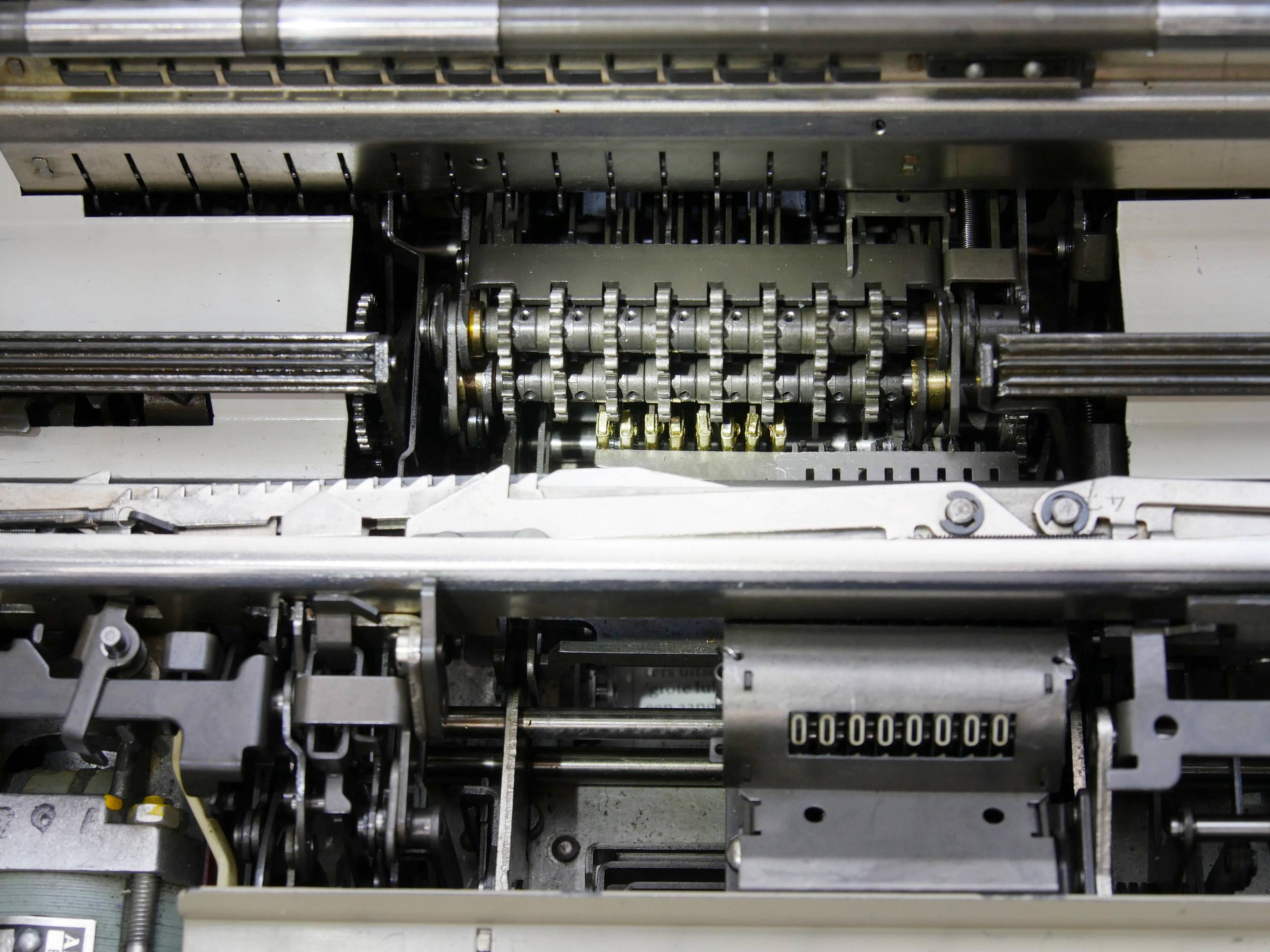
This RA16 was in a very nice condition, but mechanically blocked. It took cleaning and partly disassembling to get it running. When it finally started moving, it didn’t count right. Each of the 8 input digits seemed to count 1 more in register III or II then it should. E.g. when 00000000 was entered, 11111111 was added to reg III or II. Subtracting 00000000 resulted in 99999999. Digits are keyed into a pin box. From there they are transported to toothed racks which transfer the number to reg III or II.
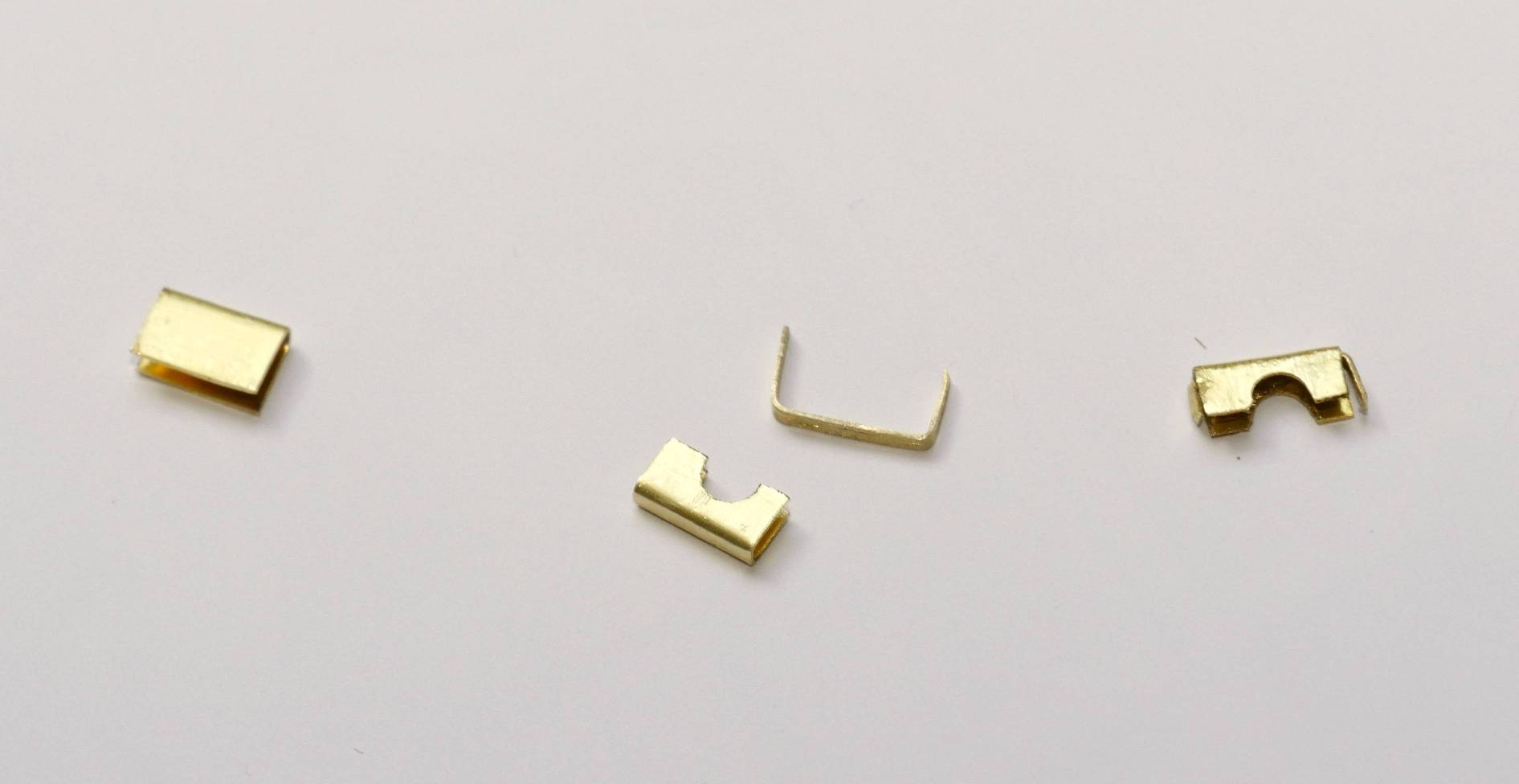
The cause of the malfunctioning appeared to be in the toothed racks of the input register. Apparently they lost length. The racks showed remainders of rivets and some kind of decayed plastic. I can only guess that there had ever been a plastic extension for noise reduction. Photo A2 shows the parts which I cut from a thin brass sheet and then glued onto the front end of the racks. Photo A1 shows the end result.
The machine now works perfectly (see video)
Of course the RA16’s casing had be removed. Mechanical tolerances are very small, making it a tougher job than expected. The easiest way perhaps is to loosen the screws of the carriage in order to create some extra margin, than remove the back cover and next remove the front cover.
I took the keyboard cover off (See photo C) and than noted that it didn’t help me much. There are only a few moving parts. Putting the cover back wasn’t easy to say the least, so I would advise not to take it off unless absolutely necessary.
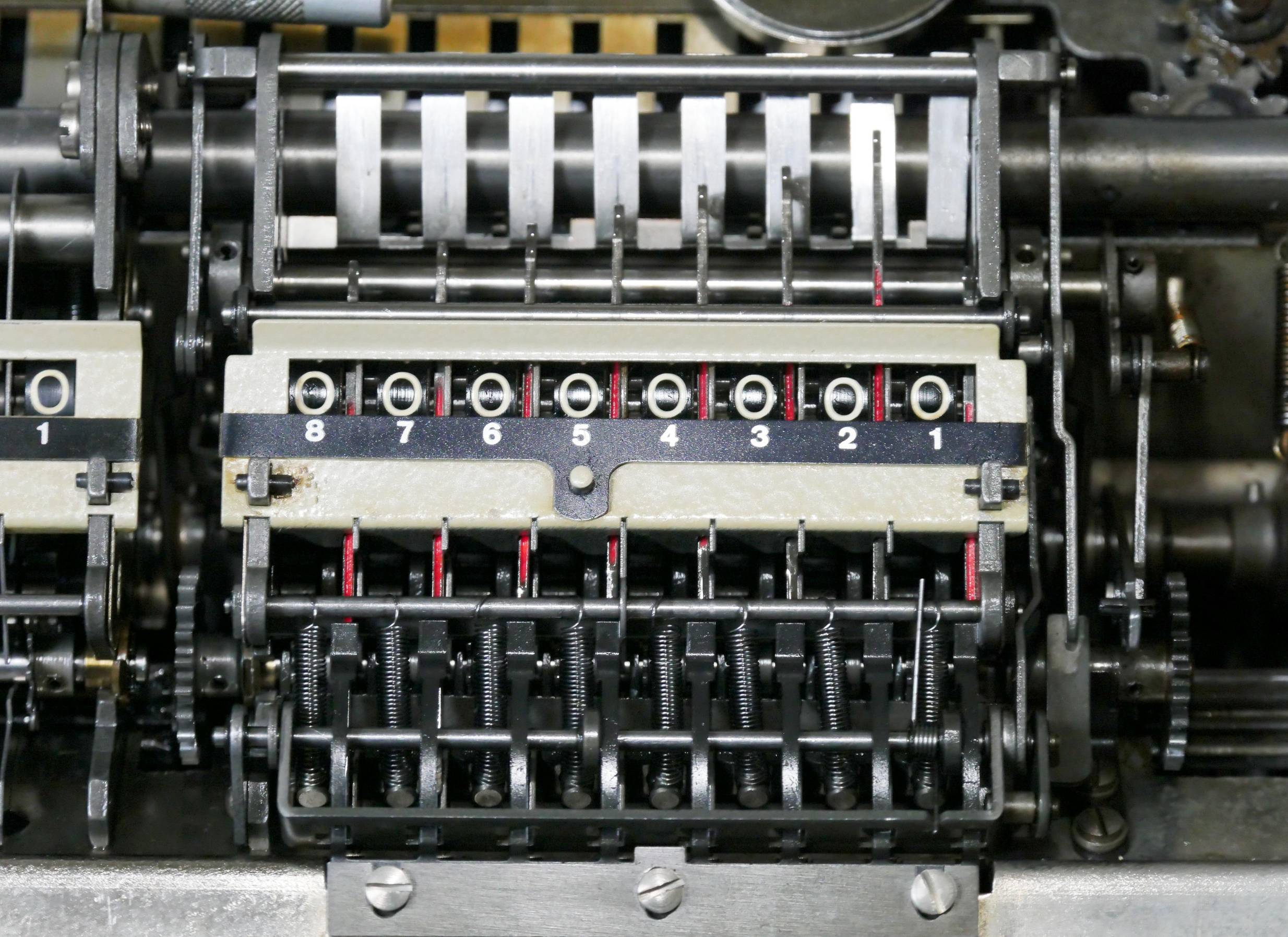
Photo B shows the memory. It is located on top of register II and is easily accessible, It consists of 8 toothed racks which can be connected to reg. II with the left one of the two levers on the carriage. The right lever clears the memory and at the same time brings the contents back to reg. II.
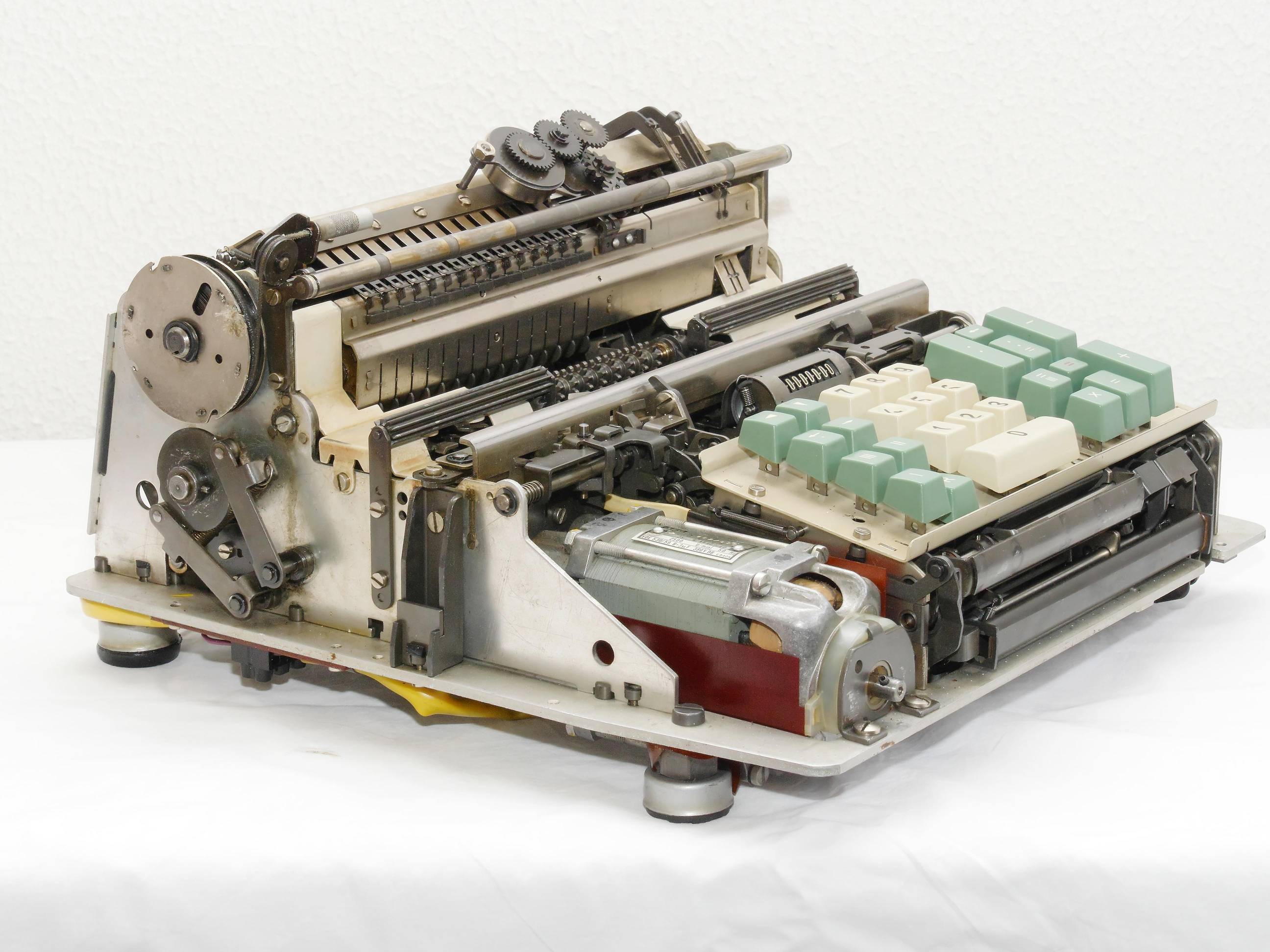
The machine is driven by an asynchronous motor which will need little maintenance. The large yellow capacitor is needed to start the motor.
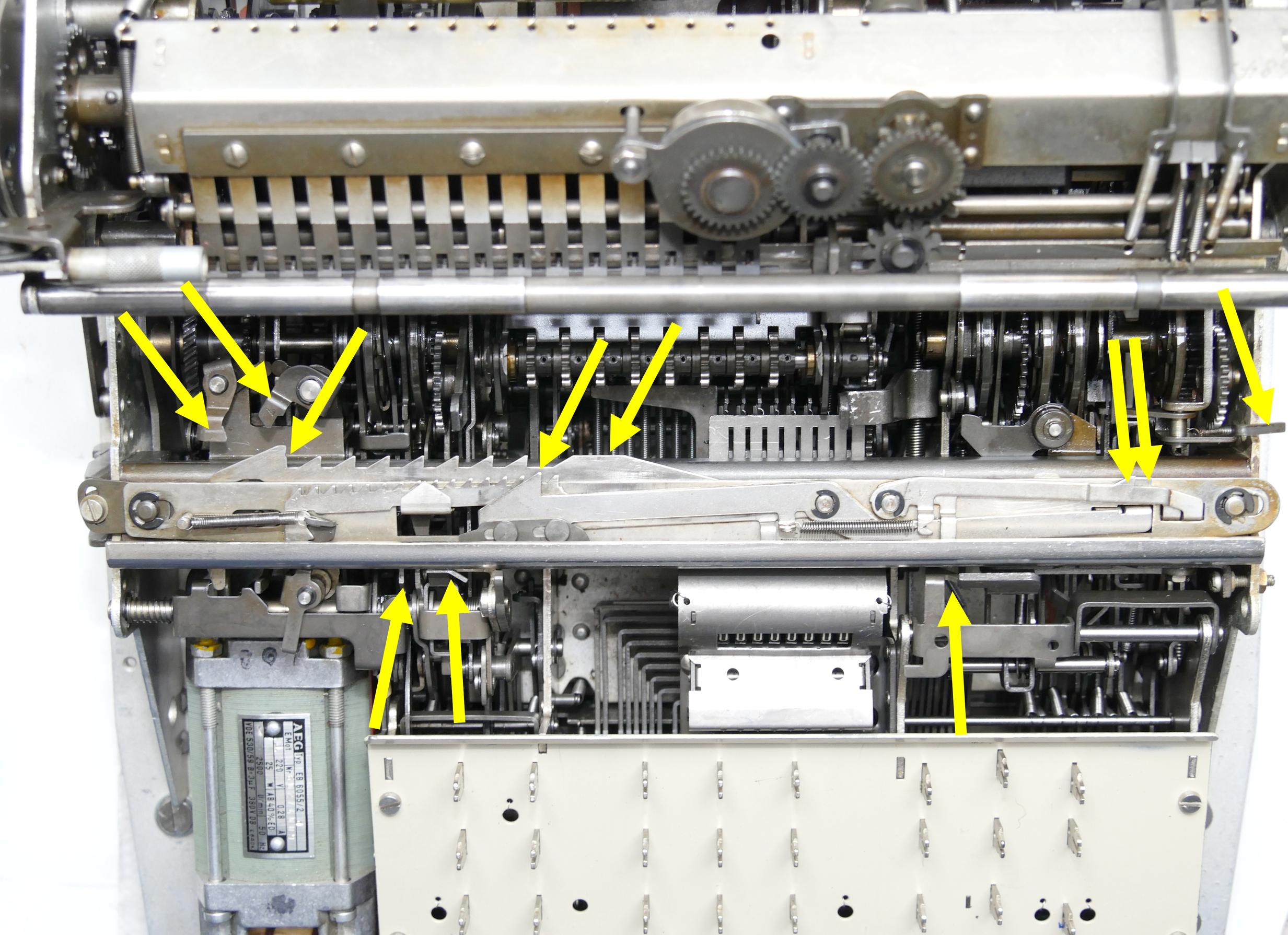
The internal construction seems more structured than many competitive machines. Operation is mainly controlled by clutches and sensors. Photos D show most of the clutches, E shows the sensors. The sensors serve two functions: they stop the carriage at the proper positions and also initiate or end an operation when appropriate.
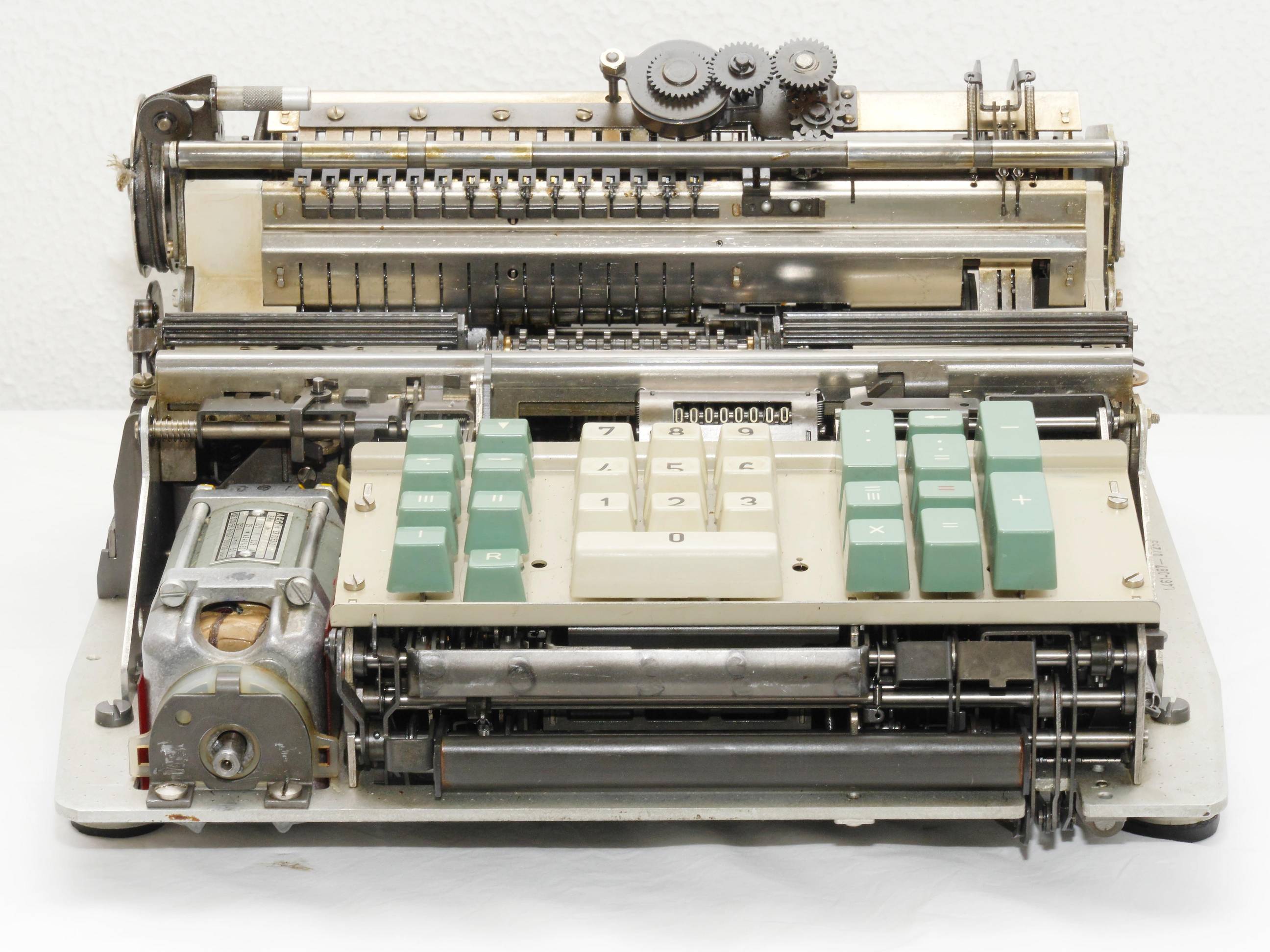


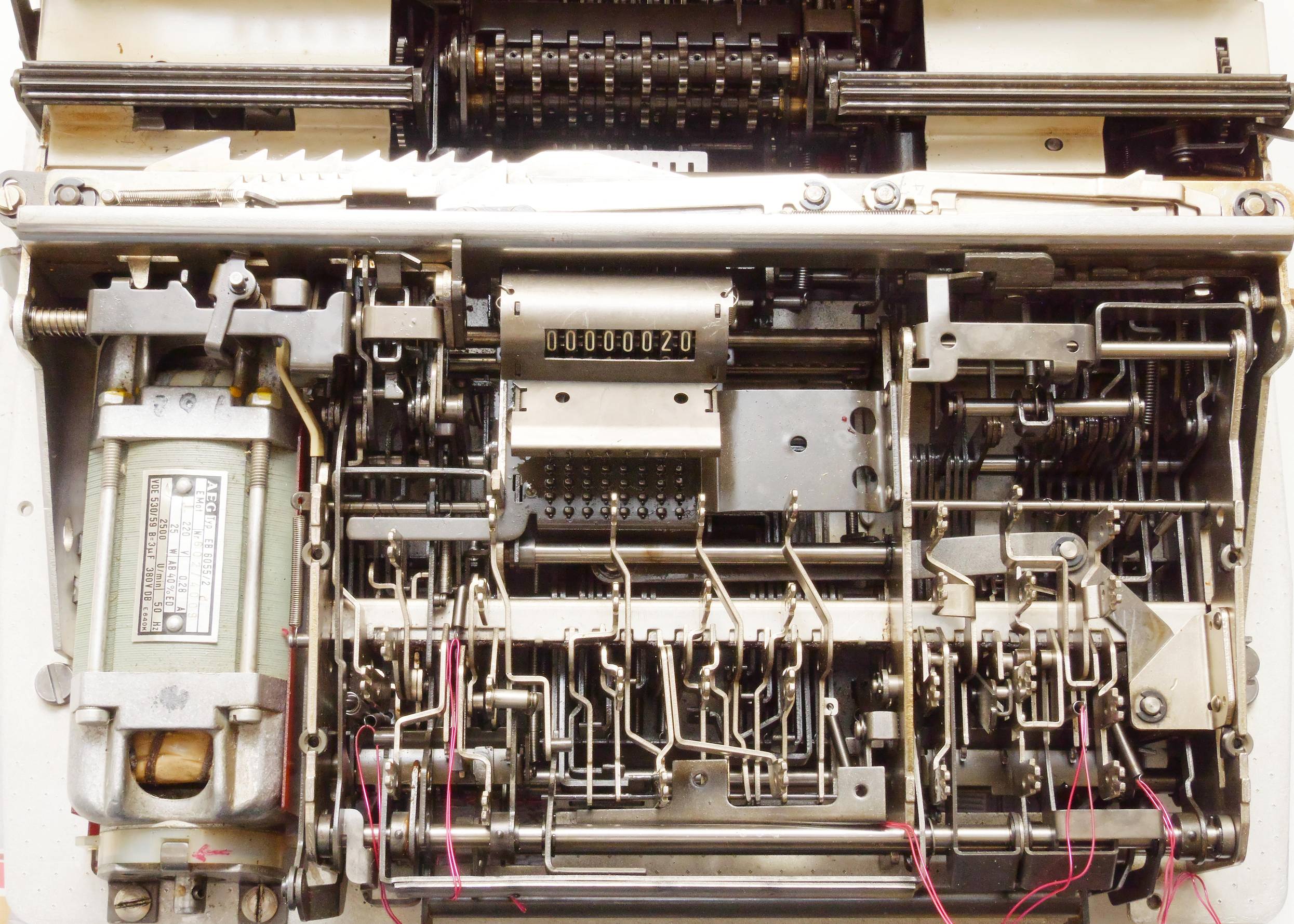
C: Keyboard inside
B: Memory

A1: Short toothed racks
A2: Rack enlargement
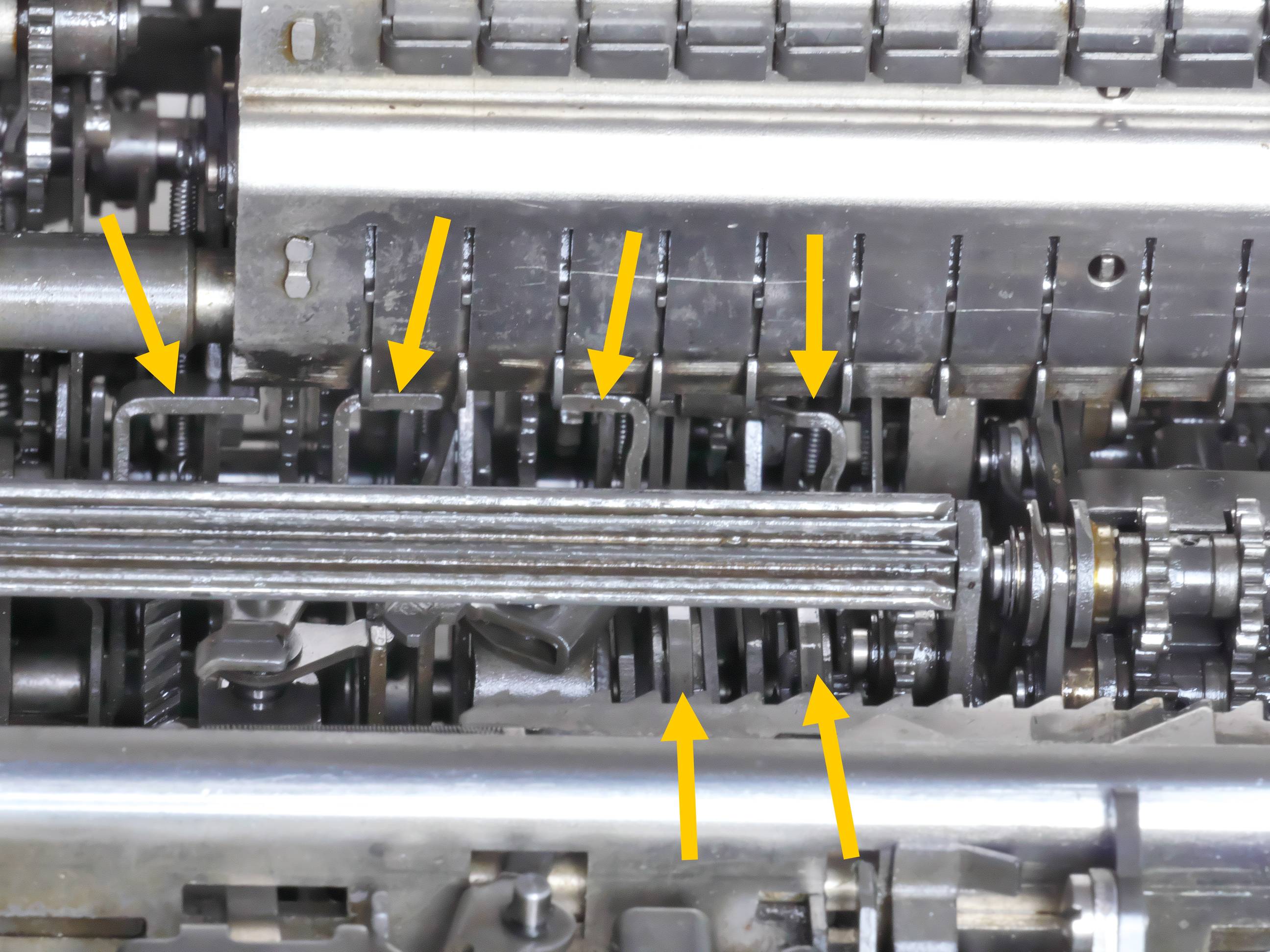
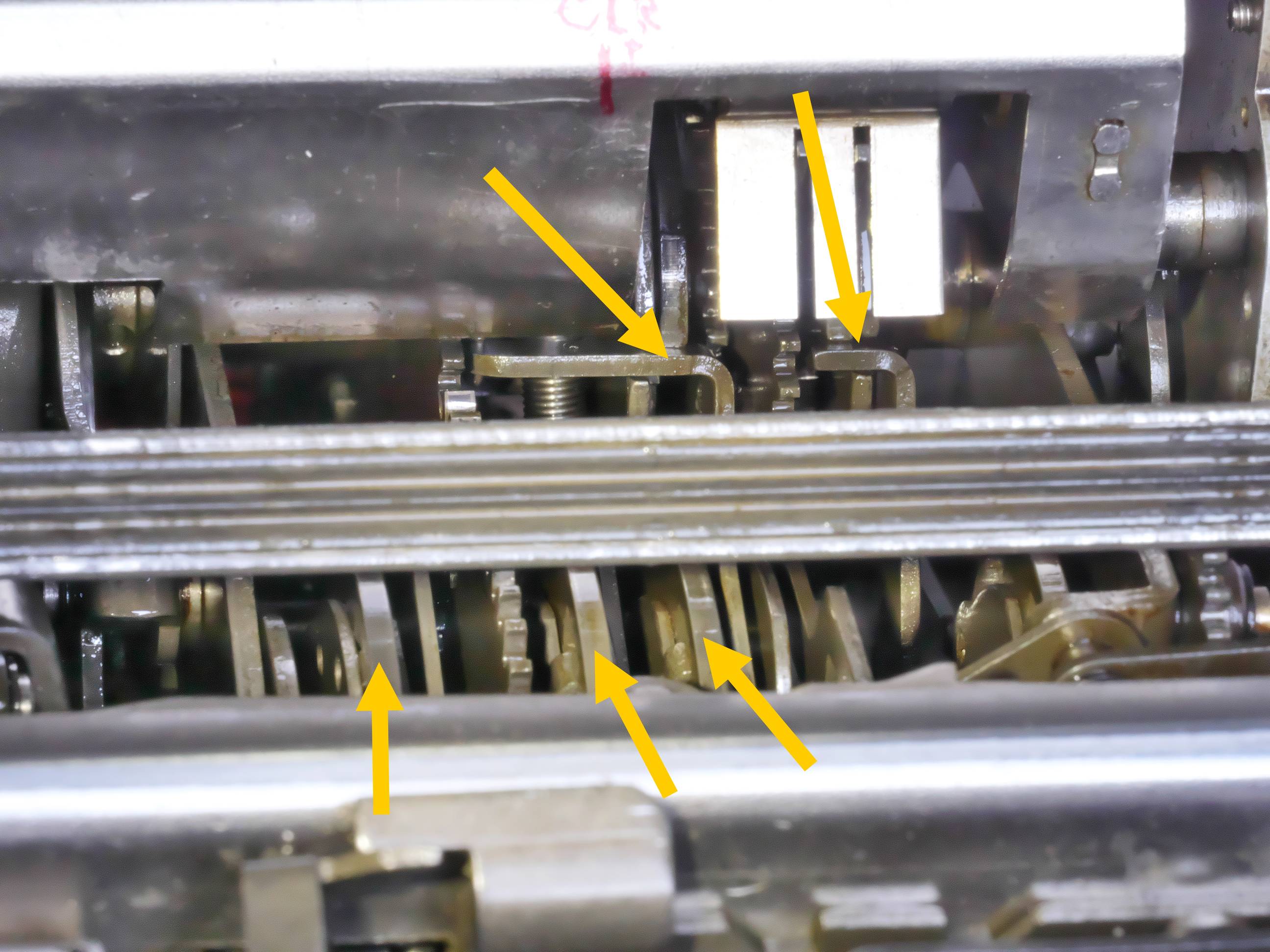
D: Operations are mainly controlled by clutches on the left and right front side + some on the back side (not visible in these photos.
E: Several sensors stop the carriage and initiate an operation when appropriate.
| Mechanical Calculators |
| Electronic Calculators |
| Typewriters |